Binny - AI Smart Trash Can
AI-Powered Waste Sorting Assistant
Binny is an AI-powered smart trash can designed to improve waste sorting accuracy in public indoor spaces. It detects a waste item using computer vision and immediately indicates the correct bin using LED feedback.
The system was built and tested as a fully functional prototype integrating hardware sensors, a YOLOv5 object detection model, and a custom user interface.
Final Prototype
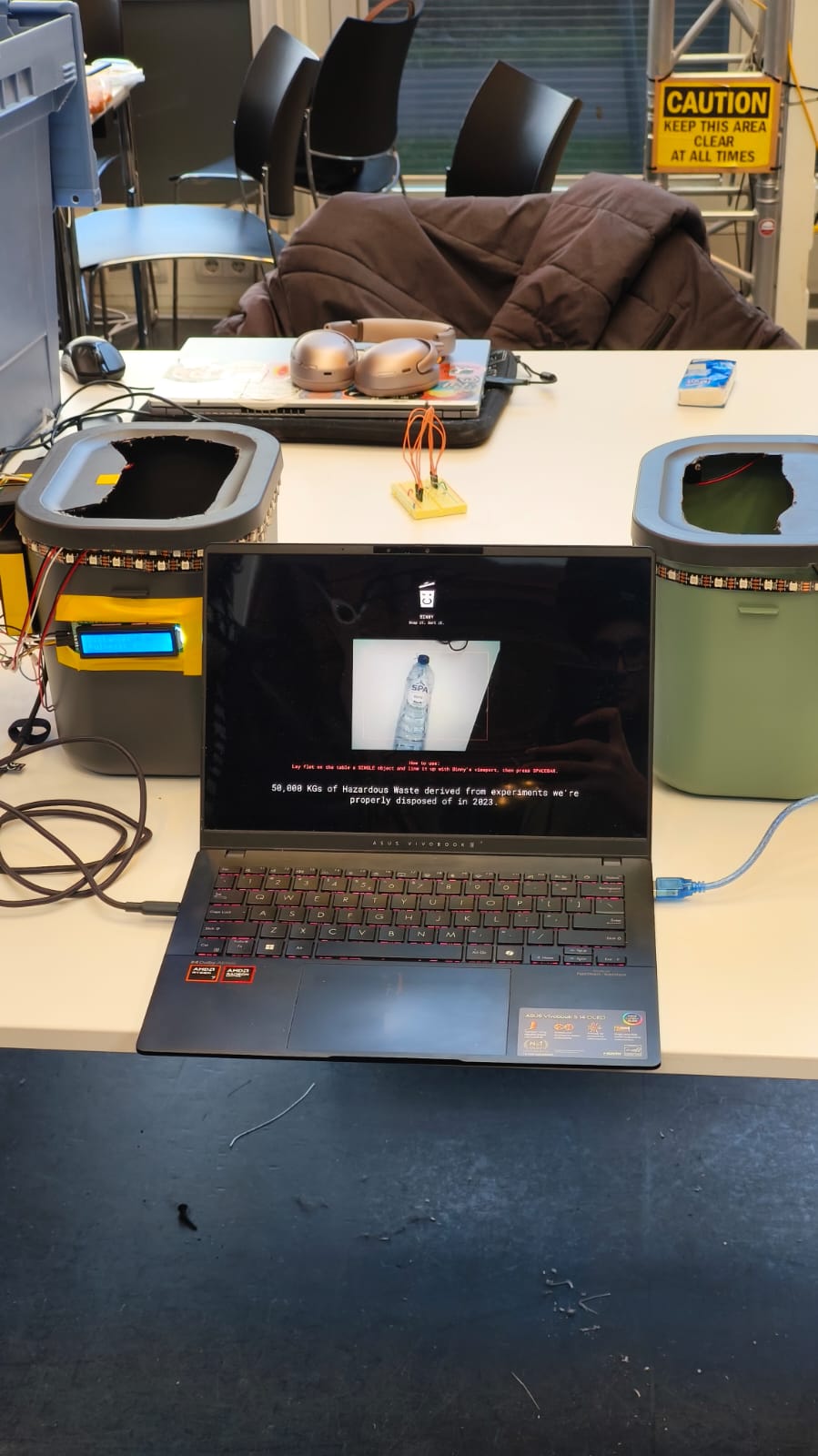
The final version integrates:
- ESP32 Camera module
- YOLOv5 AI detection model
- LED-guided bin indication
- IR break-beam detection
- Ultrasonic fullness measurement
User Interface
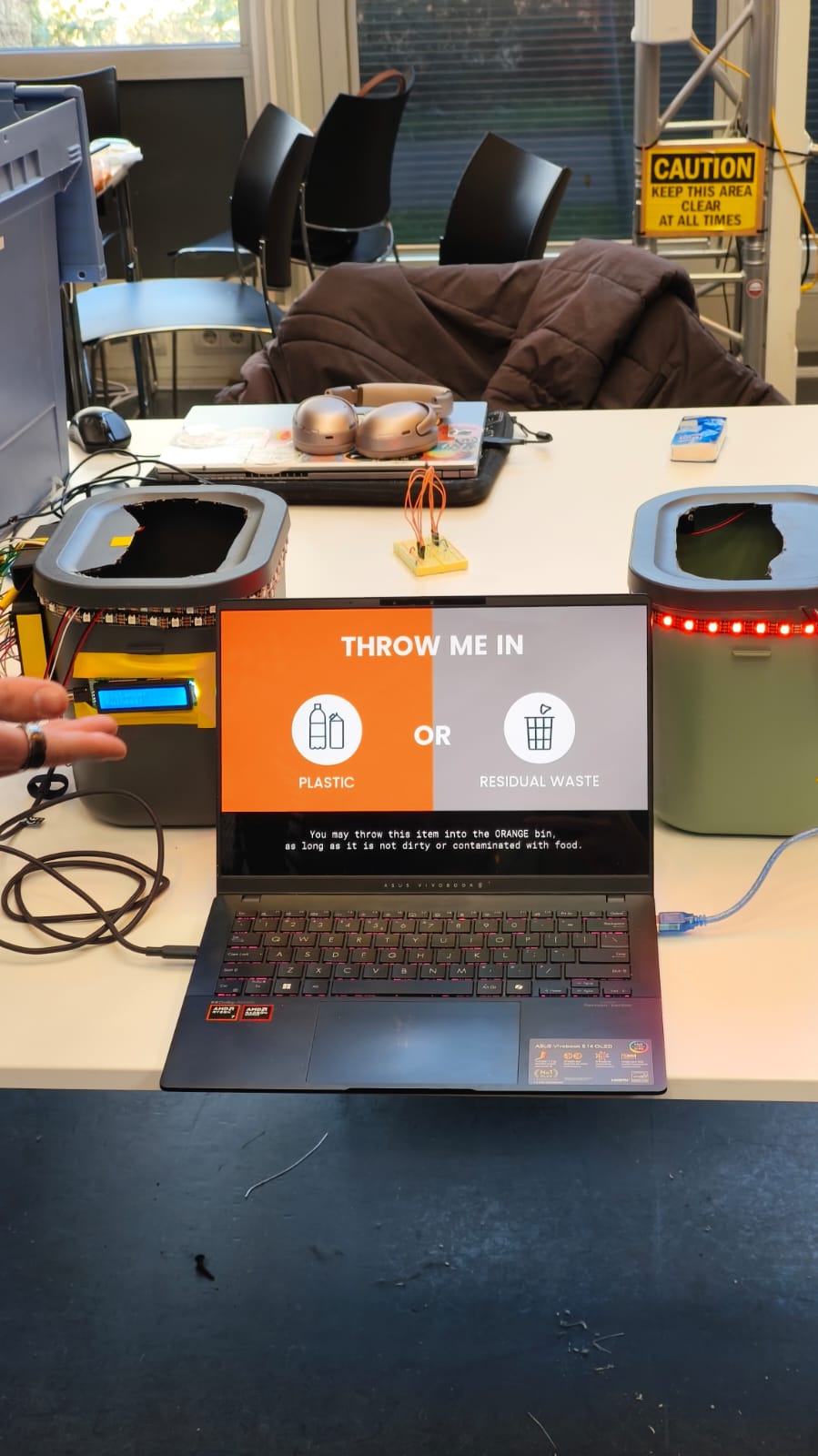
The interface provides a live camera feed, classification output, and clear bin instructions. When detection succeeds, the correct bin lights up physically and visually on-screen.
After usability testing, improvements were implemented to:
- Improve visibility of detection feedback
- Clarify positioning instructions
- Add clearer messaging when detection fails
Hardware & Wiring
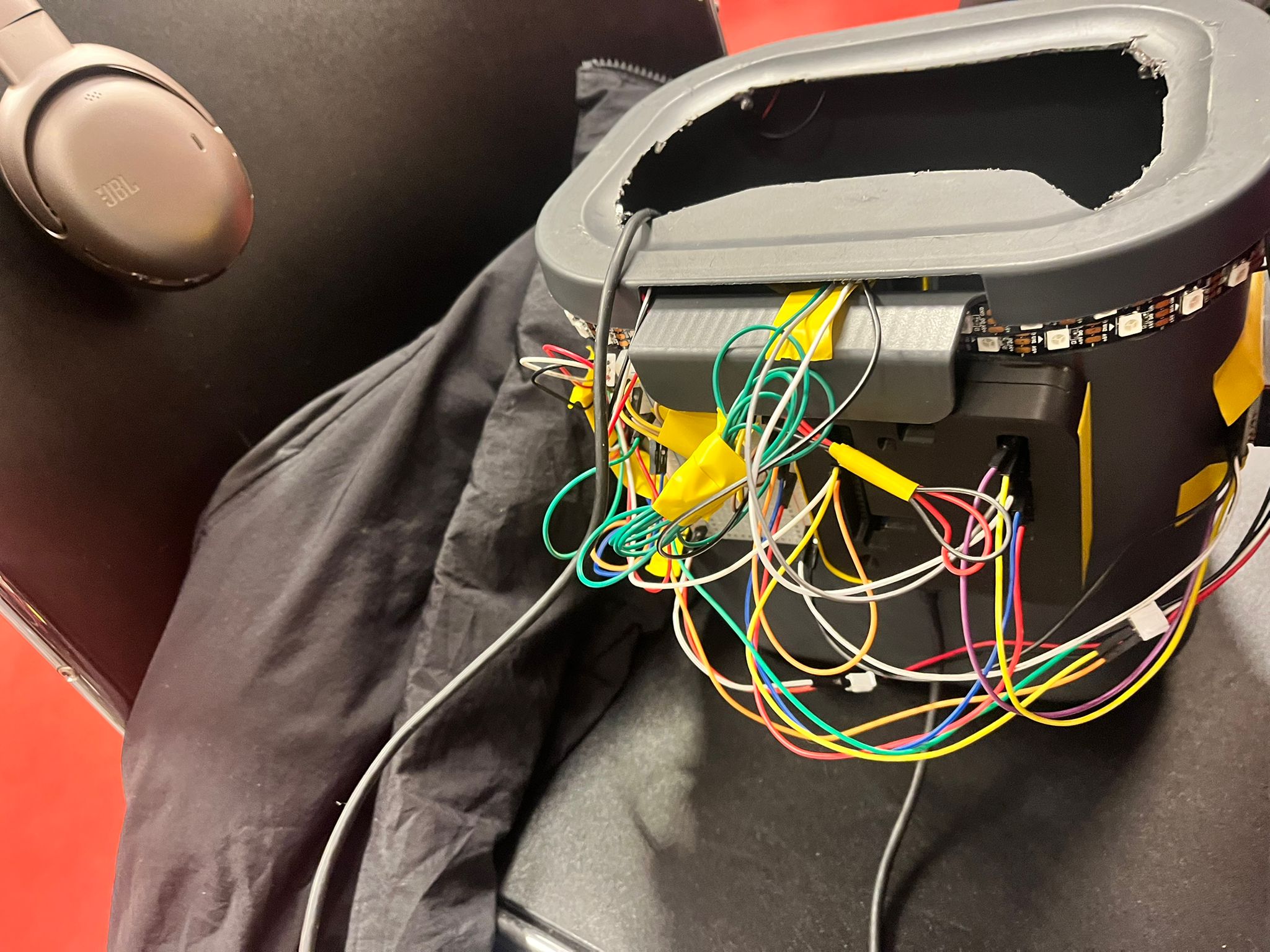
The system combines multiple distributed hardware components:
- Camera input node
- Sensor input node (IR + Ultrasonic)
- LED output control
- Central processing unit
All components communicate to create a context-aware smart environment capable of responding in real-time.
Performance Results
AI Detection
- Best performance under consistent indoor lighting
- Strong detection of plastic bottles and aluminum cans
- Lower accuracy on paper-based and opaque materials
A key finding was that many incorrect results were due to temporary detection failure. When retrying the scan, accuracy significantly improved.
This indicates that implementing automatic retry would substantially increase real-world reliability.
Sensor Performance
- IR break-beam reliably detected medium and large objects
- Ultrasonic sensor provided usable fullness approximation
- Thin objects and strong lighting reduced IR accuracy
User Testing Results
Seven participants tested Binny in a controlled evaluation.
- Interaction was intuitive and easy to understand
- Users trusted the system when results matched expectations
- Trust decreased when AI output conflicted with prior beliefs
- Educational information was often overlooked
A notable insight was that many users overestimated their knowledge of local recycling rules. Binny exposed inconsistencies between user assumptions and actual sorting policies.
Deployment Potential
The prototype demonstrates that AI-assisted sorting is technically feasible in indoor high-traffic spaces such as university campuses.
For real-world deployment:
- Replace laptop with Raspberry Pi for cost efficiency
- Train improved custom AI model
- Enhance visual feedback and error states
A first realistic deployment location would be SmartXP Lab at the University of Twente.
Impact
Binny bridges the gap between intention and action in recycling behavior. It provides guidance exactly at the decision moment without removing user responsibility.
Instead of automating sorting entirely, it supports awareness and informed decision-making.
Additional Prototype Images
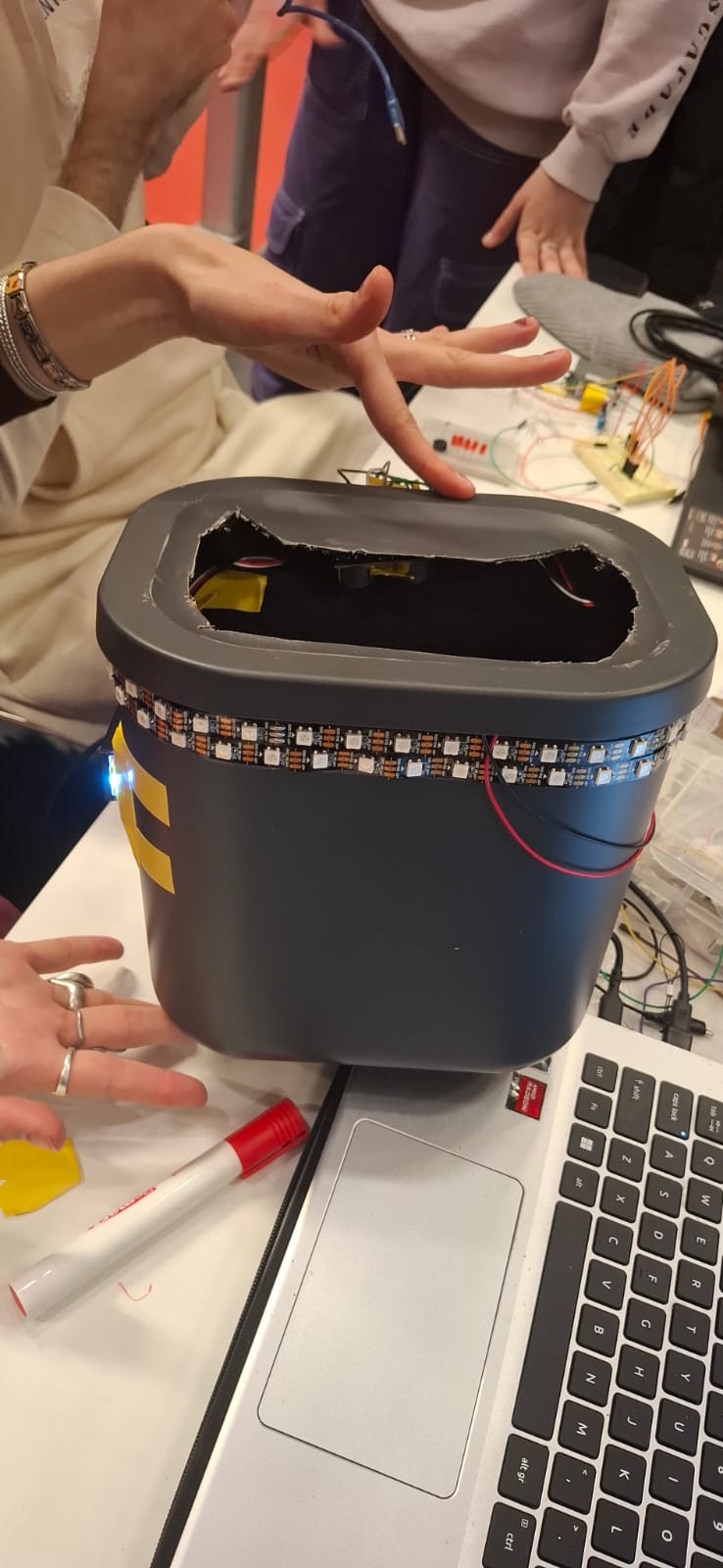
The complete system functioned as a distributed, intelligent, context-aware smart environment prototype.