Module 4 - Learning Parametric Design
During Module 4 I spent a significant amount of time learning parametric design. Before this module I had some experience with CAD software, but I had never really worked with a fully parametric workflow. Since my projects require several custom parts, I decided to invest time into learning how to design efficiently using parameters and constraints.
To learn these skills, I mainly relied on online tutorials and videos. By following examples and experimenting with my own designs, I gradually became more comfortable with sketches, constraints, dimensions, and creating models that could easily be adjusted afterwards. What initially seemed complicated quickly became one of my favourite design methods because it allows me to iterate rapidly and adapt designs without starting from scratch.
The timelapse above shows part of my design process while learning and applying parametric modelling techniques throughout the module.
Parametric Hole Block
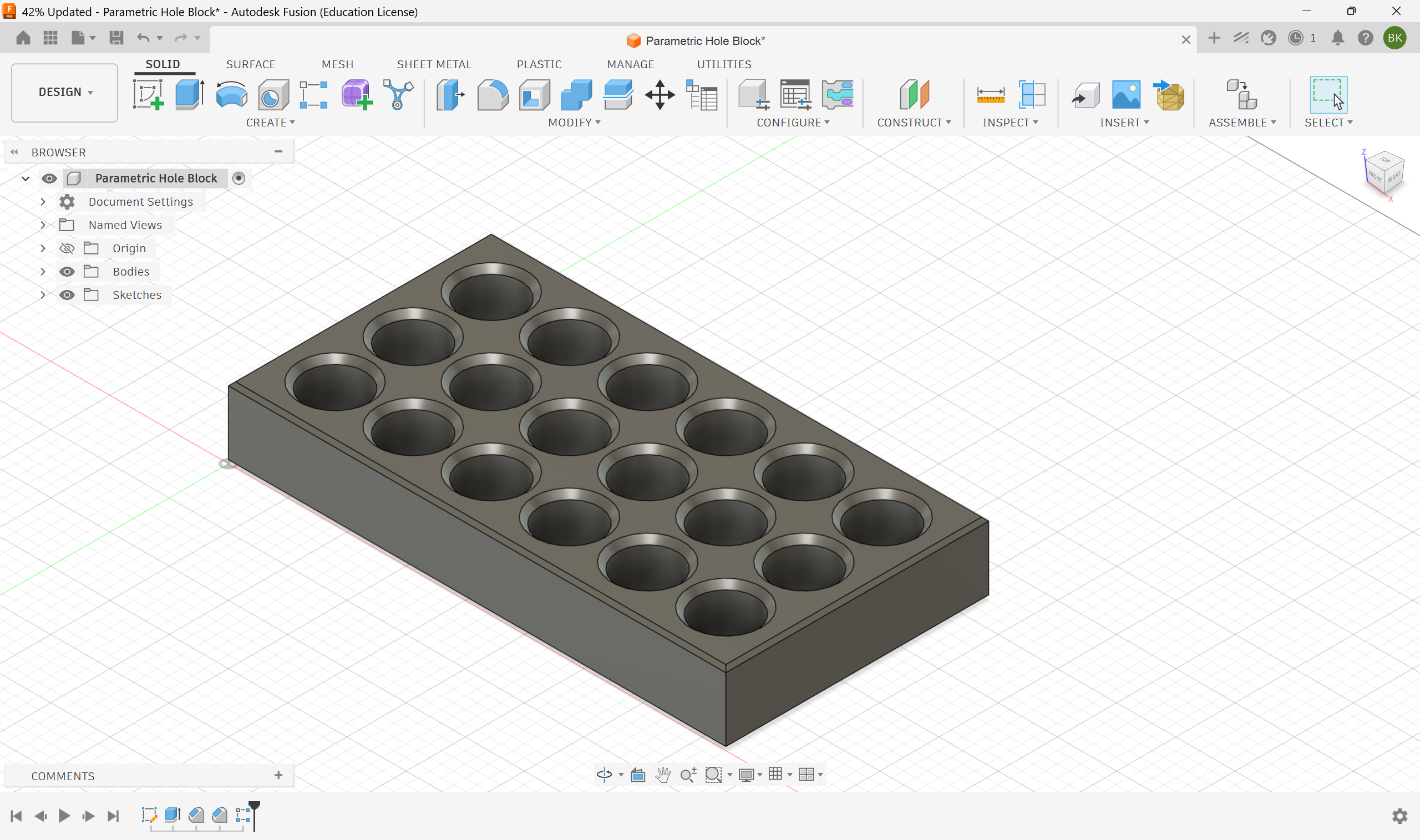
One of my first exercises was creating a parametric hole block. The goal was to understand how dimensions and parameters could control a design. By changing only a few values, the entire model would automatically adapt. This project helped me understand the power of parametric modelling and formed the foundation for the designs that followed.
Window Pin
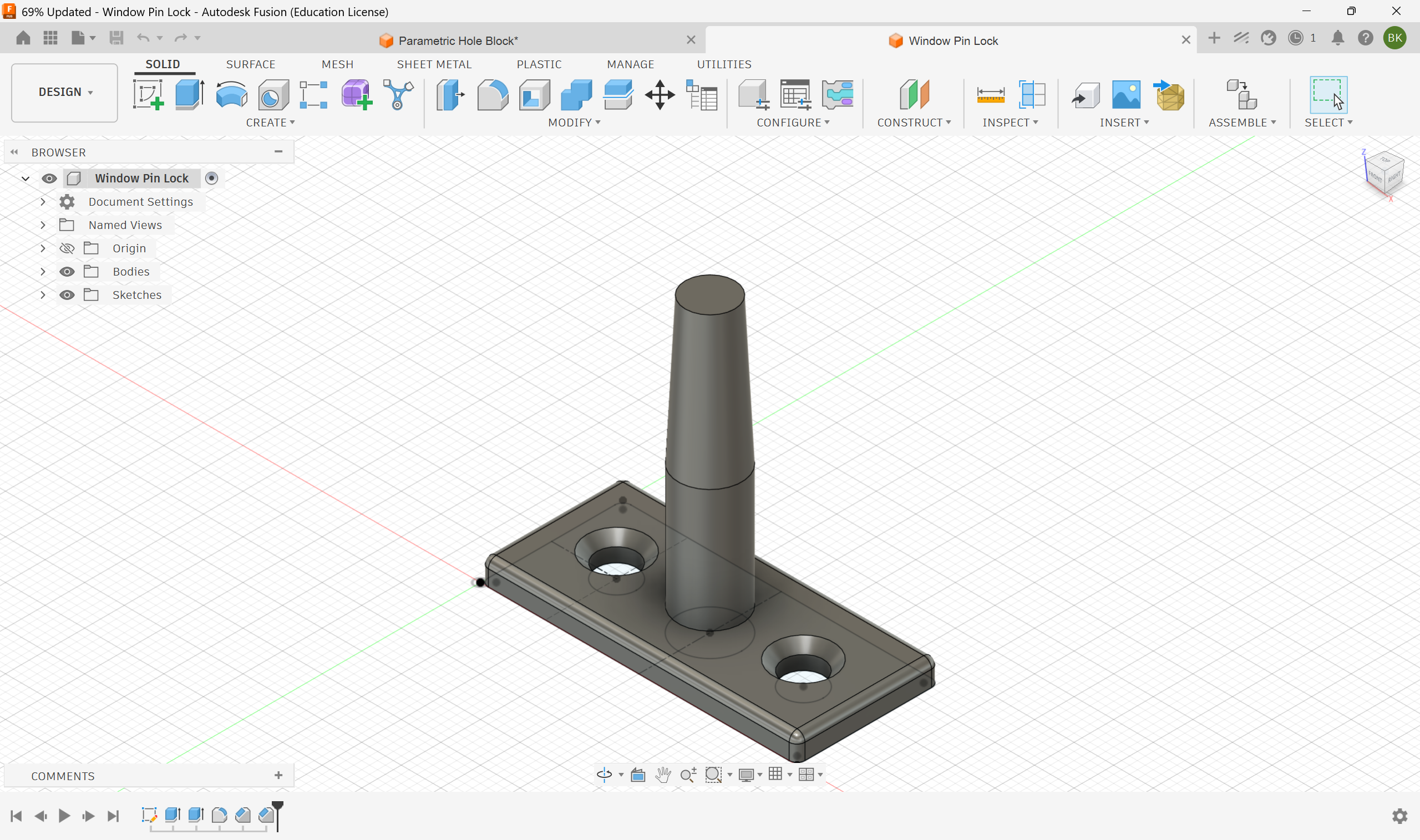
After learning the basics, I started applying parametric design to practical problems. One example was a custom window pin. Designing this small functional component showed me how useful CAD and rapid prototyping can be for everyday problems. Instead of searching for a replacement part, I could simply design and manufacture one myself.
Part for my Schadt Meister
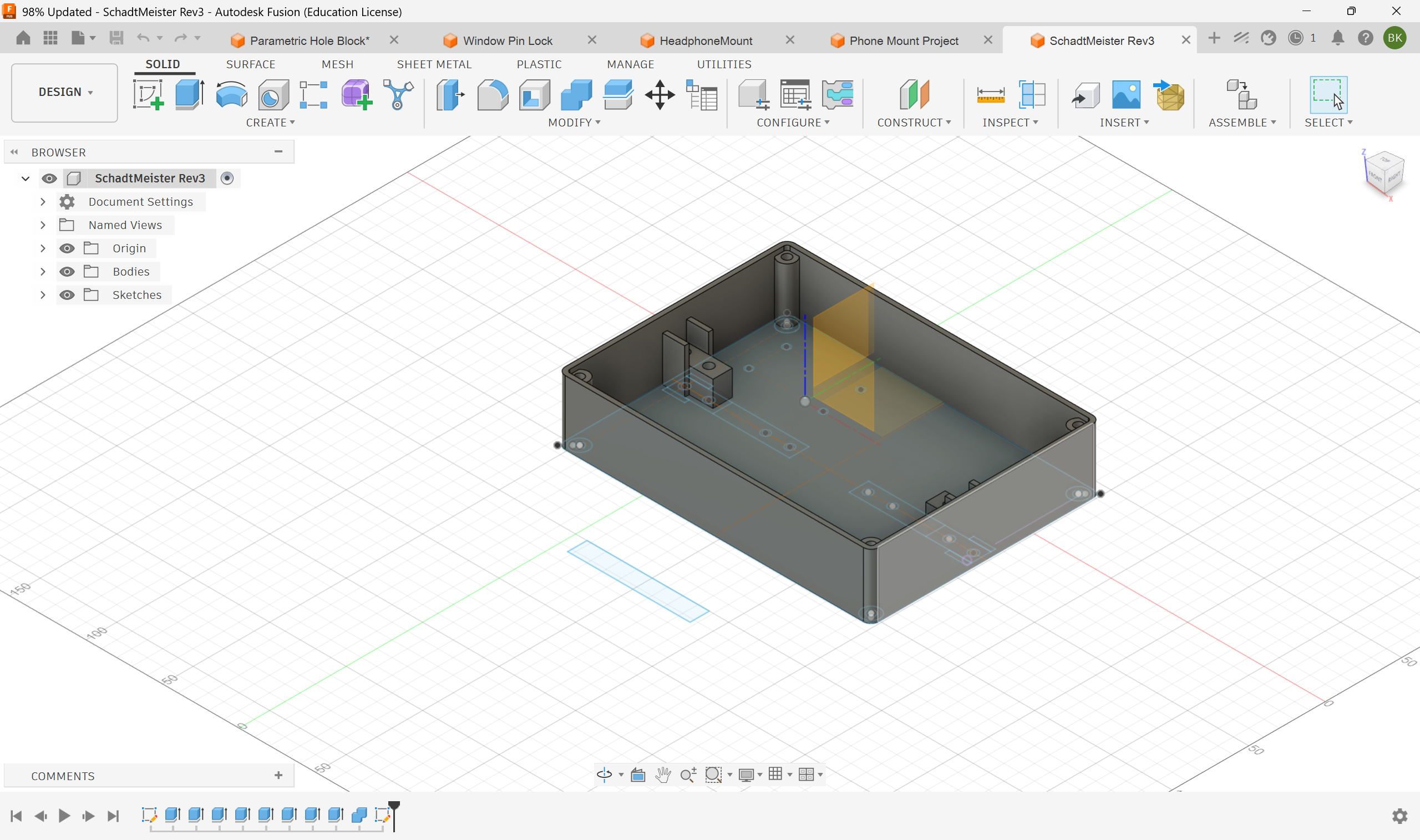
Another project involved creating a replacement part for my Schadt Meister (see its page on this website once the project is finished). This required careful measurements and translating those dimensions into a parametric model. Compared to my first designs, I noticed a significant improvement in both speed and confidence. By this point I was thinking much more systematically about constraints and design intent.
Headphone Hanger
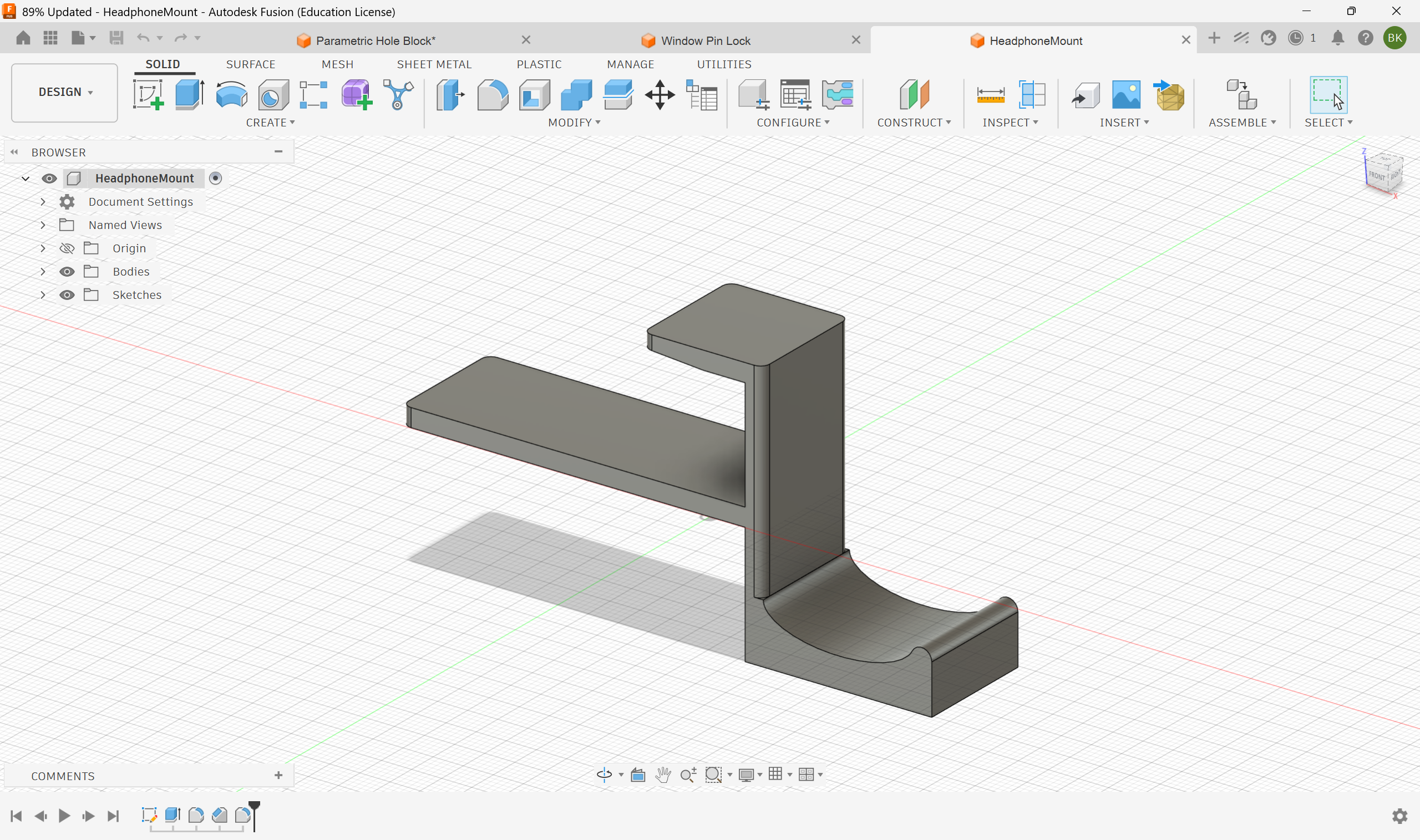
After gaining more confidence with parametric modelling, I designed a headphone hanger. This was one of the first objects I created purely to solve a practical problem for myself. The design required me to think about dimensions, strength, printability, and how different parameters affected the final result.
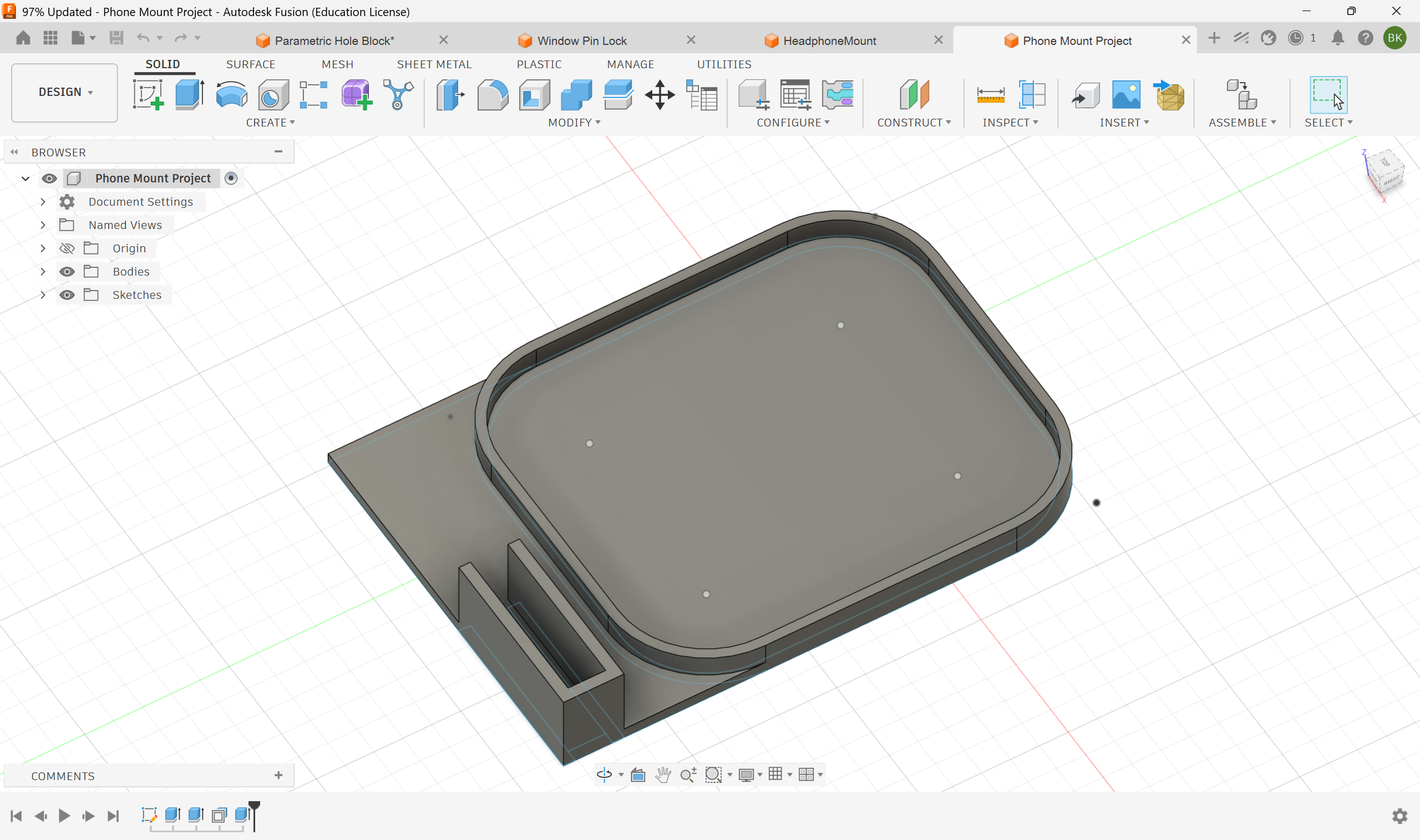
Phone Stand for the Module Project
The final design in this series was a custom phone stand that was used within our module project. This design was particularly valuable because it was not just a practice exercise; it became part of an actual project. Creating a component for a real application taught me the importance of considering usability, manufacturing, and integration with the rest of the product.
Reflection
Looking back, learning parametric design has been one of the most valuable skills I developed this module. It combines technical thinking, creativity, and problem solving in a way that fits very well with Creative Technology. What started as watching tutorial videos quickly evolved into designing functional parts for university projects and personal use. I now feel confident enough to incorporate parametric modelling into future projects and continue developing my prototyping skills.
Professional Development - The River
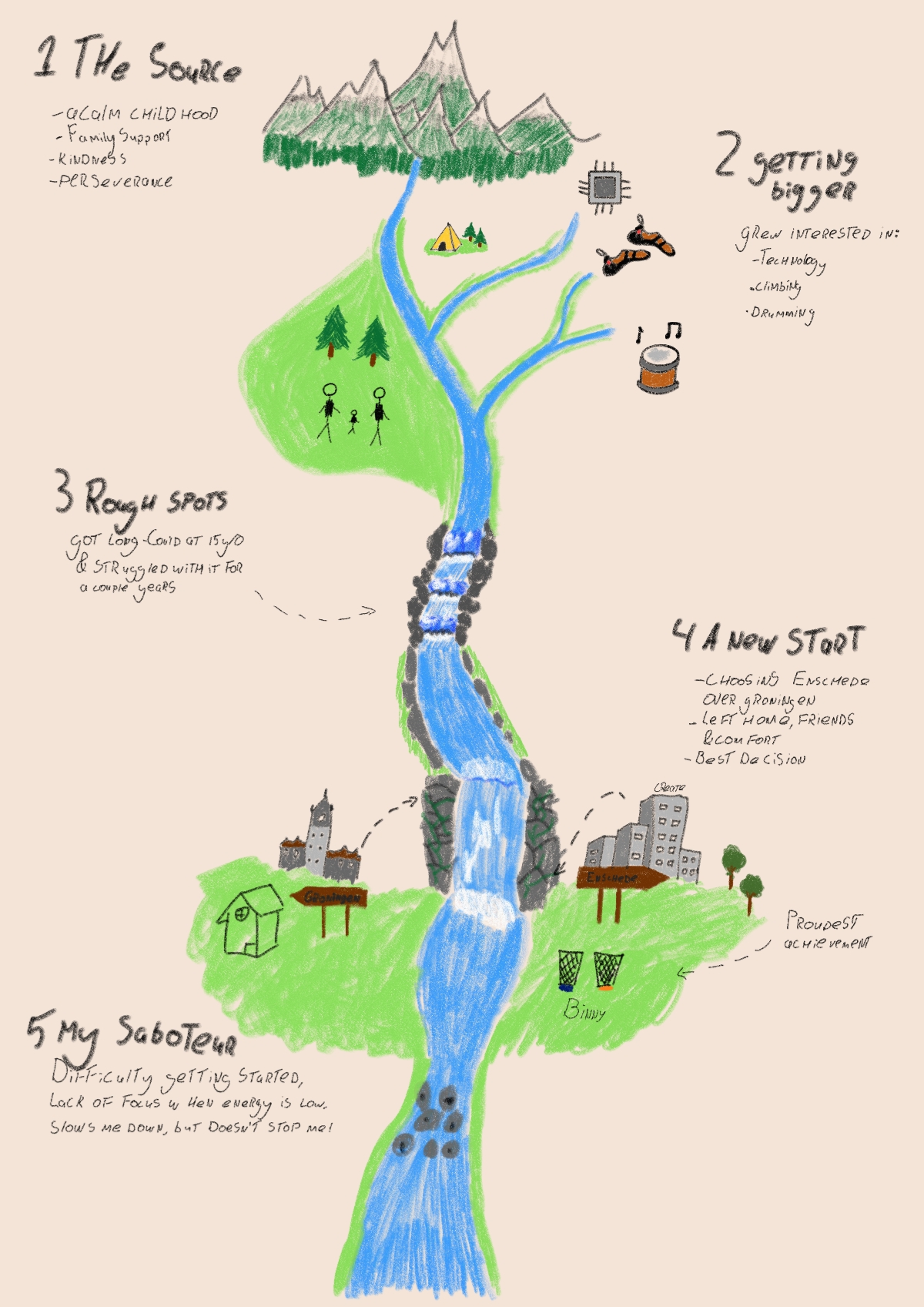
As part of Professional Development, we were asked to represent our life as a river. The exercise encouraged reflection on the experiences, challenges, and people that have shaped me so far, while also thinking about where I would like my river to flow in the future.
In my river, important tributaries include my interests in technology, climbing, and drumming. The largest obstacle is represented by the period in which I suffered from Long COVID, which taught me perseverance and resilience. A major turning point is the decision to move from Groningen to Enschede and start Creative Technology, which ultimately led to many new opportunities, friendships, and experiences.
River - Front Side
River - Back Side
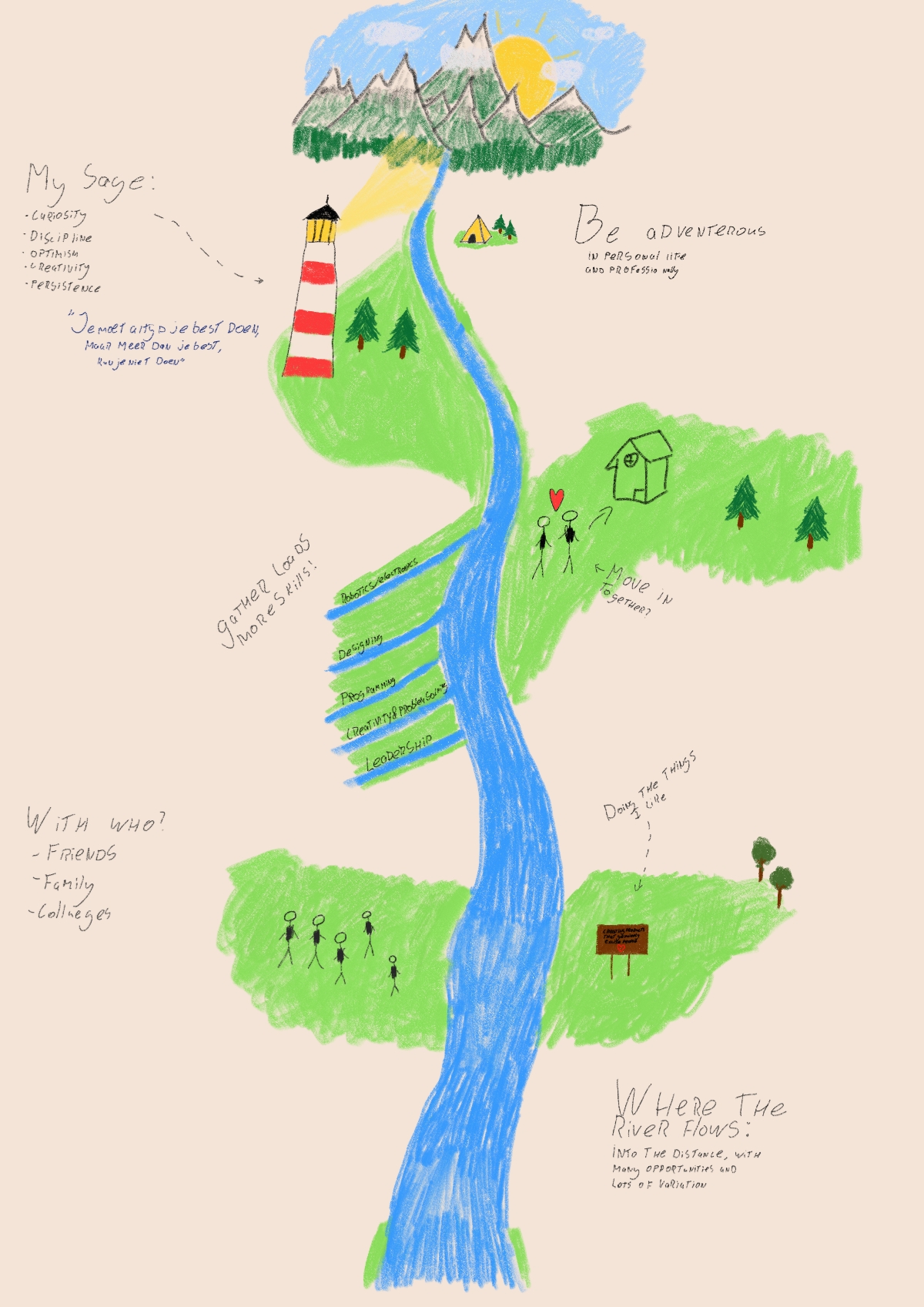
The future side of the river focuses on curiosity, creativity, persistence, and continuous growth. It reflects my ambition to further develop my skills in prototyping, electronics, design, and engineering while working on products that genuinely excite people and improve their experiences.